

Define the competencies first. Hire only against them. Skip this step and you’ll burn three months and a quarter of pipeline on the wrong rep. We’ve run this playbook on searches that closed in 21 days from kickoff to offer, and the rest of this piece shows you exactly how to run it yourself.
TL;DR:
- Defining a competency-based profile before posting a job ensures accurate testing and improves the quality of enterprise AE hires.
- Sourcing candidates through referrals, targeted outreach, and specialized recruiters significantly reduces time-to-hire, often to around 21 days, compared to general job boards.
- Using structured, competency-mapped interview processes, including case studies and roleplays, predicts early performance more effectively than relying on charisma alone.
- Setting quotas at three to five times a fully loaded OTE, with a 60% yield assumption, helps create realistic headcount plans that accommodate ramp-up time.
- Early KPI tracking on activity and pipeline development, combined with quick offer turnarounds, prevents losing top candidates to competitors in the final hiring stages.
Table of Contents
- What an enterprise AE role profile actually looks like
- Where to find enterprise sellers and how to screen them fast
- Building an interview process that actually predicts performance
- Setting comp, quota, and OTE without guessing
- Getting a new AE from signed offer to field ready
- Knowing when to hire and when to walk away
- Reading the room: cultural fit on an enterprise sales team
- Staying out of legal trouble when you hire enterprise AEs
- Building a recruiting process that widens your candidate pool
- Writing job posts and outreach that get enterprise sellers to respond
- Closing the hire without losing them in the final stretch
- What 1,200 placements taught us about hiring enterprise AEs
- Cornerstone Search: the direct solution for enterprise AE hiring
- FAQ
- Sources
What an enterprise AE role profile actually looks like
Most job descriptions for enterprise account executives are garbage. They list “5+ years experience” and “proven track record” and call it a day. That tells you nothing.
A real profile names the competencies you’re hiring for and ties each one to a checkpoint you can actually test. Forrester’s work on role-based competency maps makes the case plainly: teams that define role-specific competencies and certify reps against them before customer contact outperform teams that wing it.
For an enterprise AE, lock down these four:
- Executive presence: can they run a room with a CFO and not blink
- Complex deal orchestration: have they coordinated legal, security, and procurement on a six-figure deal
- CRM and forecast discipline: do they update the pipeline without being chased
- Solution selling: can they diagnose a business problem before pitching a feature
Layer in the non-negotiables: judgment, coachability, persistence. Skip these and you’ll hire a smooth talker who folds the first time a deal gets messy.
Turn each competency into a scoring rubric before you post the role. Building this profile takes a focused afternoon, not a committee. Our skills guide for enterprise SaaS sellers breaks down what good looks like at each level.
Pro Tip: Write the scorecard before you write the job post. If you can’t score it, don’t ask it.
Where to find enterprise sellers and how to screen them fast
Job boards are where mediocre candidates go to get rejected. The sellers you want are already employed and not looking.
Here’s the order that actually works:
- Referral and network mapping: ask your best reps and your investors who they’ve sold against or worked with
- Targeted outreach to enterprise sellers at comparable companies: find reps carrying similar quota at similar deal sizes
- Engage a specialist recruiter: when your network runs dry, a recruiter who lives in SaaS sales all day closes the gap fast
Resume and LinkedIn red flags to watch for: job-hopping under 18 months with no explanation, vague titles like “senior sales professional” with no quota mentioned, and companies that sell to SMB when your deal is enterprise. None of that automatically disqualifies someone, but it earns a sharper phone screen.
Run a 15-minute phone screen built around three questions: walk me through your largest closed deal, name everyone who touched it on the buying side, and tell me what almost killed it. Listen for specifics. Vague answers mean a padded resume.
Track time-to-hire from first conversation to offer. If a search drags past five weeks, your funnel is broken, not your luck.
Pro Tip: A candidate who can’t name the economic buyer on their biggest deal probably didn’t run that deal.
Building an interview process that actually predicts performance
Most interview loops test charisma, not skill. Fix that by mapping every stage to a competency you defined earlier.
Run three stages:
- A take-home case: give them a fictional enterprise account and ask for a 30-60-90 plan
- A panel interview: mix sales, product, and customer success so no single bias wins
- A live roleplay: have them run an executive briefing cold, with objections thrown in mid-pitch
Forrester notes that hiring great B2B sellers requires cross-functional standards, not just a sales manager’s gut call. Bring your first-line manager and someone from enablement into scoring. Calibrate scores after every round so nobody’s personal bias decides the hire alone.
Behavioral questions that separate real operators from pretenders: “Tell me about a deal you lost and what you’d do differently” beats “Tell me about a time you overcame an obstacle” every time — our behavioral interview question generator can help you craft those effectively. High performers own the loss and name the specific mistake. Weak candidates blame procurement or budget cuts.
Role-based competency maps show that teams which certify reps against defined profiles before full ramp see stronger early performance, which is exactly why the scorecard from your role profile belongs in every interview debrief. Our interview question list gives you a bank to pull from instead of improvising.
Setting comp, quota, and OTE without guessing
Quota math isn’t mysterious. Set enterprise AE quota at 3x to 5x the rep’s fully burdened OTE, with the multiplier shifting based on average deal size and sales cycle length.
Here’s how to plan headcount:
- Set your revenue target for the year
- Divide by average quota per rep to get a raw headcount number
- Apply a conservative 60% yield assumption because not every hire ramps on time
- Add one manager for roughly every eight reps
Worked example: say your target is $3 million in new annual recurring revenue and each enterprise AE carries a $600,000 quota. That’s five reps on paper.
SaaStr’s hiring math shows founders routinely underestimate headcount needed to hit plan, often by close to double. Build your plan assuming 6 to 9 months for a new enterprise AE to hit full ramp.
Getting a new AE from signed offer to field ready
Signing the offer is the easy part. Getting a new enterprise AE productive is where most companies drop the ball.
Build a certification checklist, not a vague “shadow a few calls” plan:
- Week 1: product certification and messaging drills
- Week 2 to 4: shadow live deals and run mock discovery calls
- Month 2: own a real account under manager supervision
- Month 3: run a full-cycle deal solo with manager check-ins
Set early KPI milestones tied to pipeline generated and meetings booked, not just closed revenue, since enterprise cycles are long. Run weekly manager check-ins for the first 90 days. If a new AE shows no pipeline movement within 1.5 sales cycles, that’s your signal to start a remediation plan or cut the cord early rather than waiting for a bad quarter to confirm what you already suspected.
Pro Tip: Measure activity and pipeline quality in month one. Revenue is a lagging indicator you won’t see for months on an enterprise deal.
Knowing when to hire and when to walk away
Some signals are obvious once you know to look for them. Others get rationalized away because the search has dragged on too long.
Immediate disqualifiers:
- They can’t name specific numbers from their last three closed deals
- They blame every loss on something outside their control
- They dodge roleplay or ask to “just talk through it” instead of running it live
- References are vague or oddly reluctant to specifics
If a candidate is strong on competencies but light on a specific skill, like enterprise security review experience, price that risk into the offer with a longer ramp period rather than passing outright. Use a conditional ramp clause or a short paid trial when you’re close but not certain. Never compromise on judgment or coachability. Those don’t improve with training.
Reading the room: cultural fit on an enterprise sales team
Cultural fit gets treated like a soft, fuzzy add-on. It isn’t. An enterprise AE who can’t operate inside your team’s rhythm will underperform even with great skills.
Start by defining what your team’s culture actually rewards. Some teams run on fierce individual competition. Others run on tight collaboration between AEs, sales engineers, and customer success. A rep who thrived in a solo-hunter culture can struggle badly on a team built around pod selling.
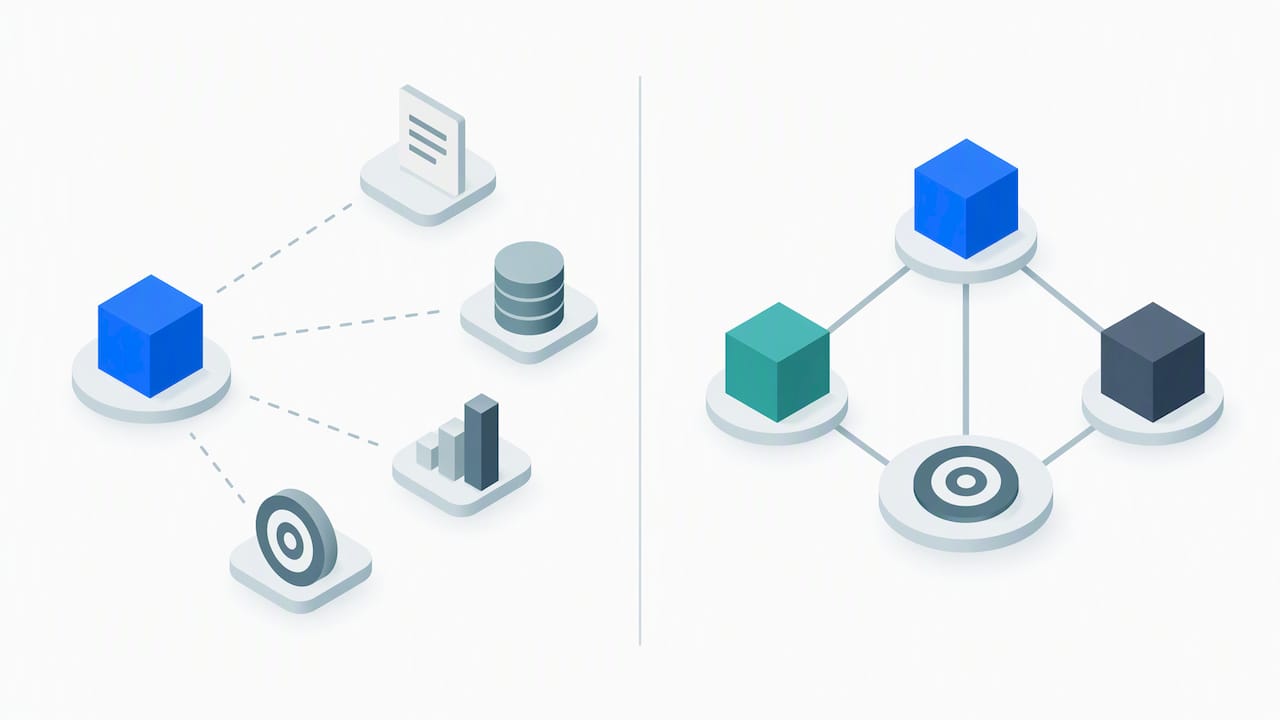
Test for fit directly in the interview loop. Ask how they’ve handled disagreement with a sales engineer over deal strategy. Ask how they split credit on a team-sold deal. Watch how they talk about former colleagues: respect and specifics are good signs, and dismissiveness is a flag.
Bring a peer, not just a manager, into at least one interview stage. A future teammate will spot friction a hiring manager might miss. And be honest with candidates about what your culture actually is. Overselling a laid-back environment to a candidate who thrives on structure sets up an exit in month four.
Staying out of legal trouble when you hire enterprise AEs
Hiring fast doesn’t mean hiring sloppy. A handful of legal basics apply across most jurisdictions, though specifics vary by state and country, so check with employment counsel on anything that touches your actual offer letter.
Keep interview questions tied strictly to job-related competencies. Questions about age, family planning, health, or national origin aren’t just risky, they’re often illegal to ask outright. Stick to your scorecard and you naturally avoid most of this.
Document your process. If you reject a candidate, keep notes tied to the competencies they failed to demonstrate, not vague impressions. That protects you if a rejected candidate ever raises a discrimination claim.
Review non-compete and non-solicit clauses in a candidate’s current contract before you make an offer, especially if they’re coming from a direct competitor’s customer base. Some states restrict non-competes heavily, others enforce them, so this is worth a quick legal check rather than a guess.
Commission plans and clawback clauses need to be in writing and signed before a rep’s first day, not negotiated after they’ve already started selling.
Building a recruiting process that widens your candidate pool
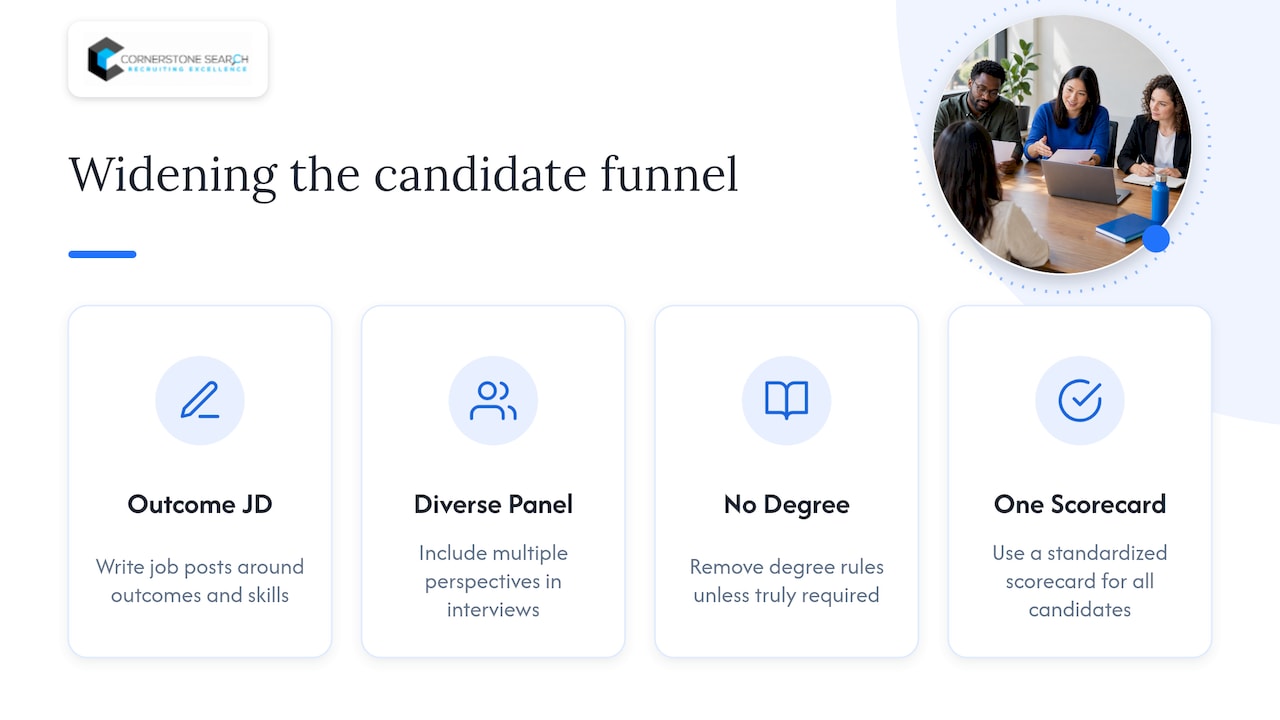
A narrow sourcing funnel gets you the same five LinkedIn profiles every recruiter in your market is already chasing. Widening the funnel isn’t charity, it’s how you find sellers your competitors overlook.
Write job descriptions around outcomes and competencies, not buzzwords and pedigree requirements. “Must have worked at a name-brand SaaS unicorn” filters out strong sellers from smaller companies who never got the brand recognition but closed just as hard.
Structure your interview panel with more than one perspective in the room. A single interviewer’s blind spots become the whole team’s blind spots when nobody else weighs in.
Remove degree requirements unless the role genuinely needs one. Enterprise sales skill correlates with deal experience, not a diploma.
Standardize your scorecard across every candidate so the bar doesn’t shift depending on who’s likeable in the room. That consistency protects quality and widens who gets a fair look.
Writing job posts and outreach that get enterprise sellers to respond
A job post that reads like legal boilerplate gets ignored by the sellers you actually want. Lead with the deal size, the quota, and the problem you’re solving, not a list of generic responsibilities.
A strong enterprise AE post opens with something like: “You’ll own a $500,000 to $1.5 million pipeline selling into Fortune 1000 procurement teams, with a sales cycle of 6 to 9 months.” That tells a qualified seller in one sentence whether this role fits their experience.
Cold outreach works the same way. Skip “Exciting opportunity at a fast-growing startup” entirely, every recruiter sends that line and every good seller deletes it. Instead, reference something specific: the account they closed last year, the vertical they sell into, or a mutual connection. Specificity gets replies. Generic templates get ignored.
Keep the outreach short. Three sentences: who you are, why you’re reaching out to them specifically, and a clear ask for 15 minutes. Long outreach messages read as desperate.
Closing the hire without losing them in the final stretch
Good enterprise AE candidates have options. If your offer process drags, a competing company closes them while you’re still finalizing paperwork.
Move fast once you’ve decided. Verbal offer within 24 hours of the final interview, written offer within 48. Every extra day is a day a competing offer can land.
Negotiate base and OTE split honestly rather than padding OTE with unrealistic accelerators to make the number look bigger. Strong candidates run the math and see through inflated upside that depends on a quota they haven’t validated yet.
Address equity, ramp guarantees, and draw periods directly in the offer conversation rather than leaving them for the candidate to ask about after they’ve already signed. Surprises after signing create early resentment that shows up in month three.
If a candidate is weighing a competing offer, don’t bad-mouth the other company. Sell your own pipeline, your own product, and your own growth story. Confidence closes better than disparagement.
What 1,200 placements taught us about hiring enterprise AEs
Founders make the same mistakes on repeat. They skip the role profile and hire on charisma. They underbudget headcount. They give a struggling rep six more months out of guilt instead of data.
We’ve run searches that hit offer in 21 days from kickoff, and the ones that moved fast all had one thing in common: a tight competency profile before we ever opened a single resume. Across more than 1,200 placements, the hires that stuck were never the smoothest talkers. They were the ones who could show their work on a real deal.
Here’s the challenge for your next hire: write the scorecard before the job post. Everything else gets easier after that.
— Rich Rosen
Cornerstone Search: the direct solution for enterprise AE hiring
Running this playbook yourself takes real time, time most founders and sales leaders don’t have while also carrying a number. We built our practice to shortcut that without cutting corners on fit.
Our Software Sales Recruitment service runs the full search: competency mapping, candidate sourcing from a network built since 1996, structured screening, and reference checks, all before a candidate ever reaches your final interview. For senior enterprise hires or sales leadership, our Executive Search Recruitment service runs the same discipline at the leadership level.
What that gets you:
- An average of 21 days from search kickoff to offer acceptance
- A track record of over 1,200 placements since 1996
- A search run personally, not handed off to a junior associate
If you’re ready to stop burning weeks on a search that’s going sideways, start with our software sales recruitment page and tell us what the role needs. We’ll tell you honestly whether we’re the right fit before you sign anything.
FAQ
How long does it take to hire an enterprise account executive?
With a retained specialist running the search, expect roughly 21 days from kickoff to offer acceptance. Running it internally without a dedicated recruiter usually takes much longer, often eight weeks or more, because sourcing and screening compete with everyone’s day job.
What quota should an enterprise AE carry?
A common rule of thumb sets quota at 3x to 5x the rep’s fully burdened OTE, with the exact multiplier depending on deal size and sales cycle length.
How long should a new enterprise AE take to ramp?
Plan for 6 to 9 months to full ramp on enterprise deals, given the longer sales cycles involved. You should still see measurable pipeline movement within the first 1.5 sales cycles as an early signal the hire is on track.
What does it cost to hire through a specialist recruiter versus internally?
Cornerstone Search runs on a placement-fee model with pricing available on request through our software sales recruitment service. Internal hiring has its own hidden costs, including recruiter time, extended vacancy, and the revenue risk of a slow or failed search.
What are the biggest red flags when interviewing enterprise AE candidates?
Watch for candidates who can’t name specific numbers or stakeholders from their largest closed deals, and candidates who blame every past loss on external factors. Vague or reluctant references are another strong signal to slow down and dig deeper before extending an offer.
Sources
- Role-based sales competency maps (Forrester blog)
- Dear SaaStr: What quota should I give to my enterprise sales reps? (SaaStr)