

Retained executive search is defined as an exclusive, upfront-fee recruitment model where a client organization engages a search firm to conduct a dedicated, proactive search for senior-level leadership talent. Unlike contingency recruiting, where firms compete and collect fees only on placement, retained search requires a financial commitment before work begins. That commitment funds a structured, research-intensive process focused on C-suite, VP, and board-level roles. Fees typically run 25–33% of the placed executive’s first-year compensation, paid in installments across the engagement. For organizations hiring at the top, this model is the industry standard.
What is a retained executive search, explained for HR leaders?
Retained executive search is the recognized industry term for a formal, exclusive search engagement. The client pays a retainer to secure the firm’s full attention and resources for a single, defined search. No other client competes for the firm’s time on that role.
The fee structure follows a three-installment pattern. The first payment triggers on engagement, the second on delivery of a qualified shortlist, and the third upon candidate placement or start date. This structure keeps both parties accountable throughout the process. The firm has skin in the game from day one, and so does the client.

Retained search targets roles compensating above $200,000 annually. These are positions where a wrong hire costs far more than the search fee. The model exists precisely because the stakes at the senior level demand a different approach than posting a job and waiting.
How does retained search work, step by step?
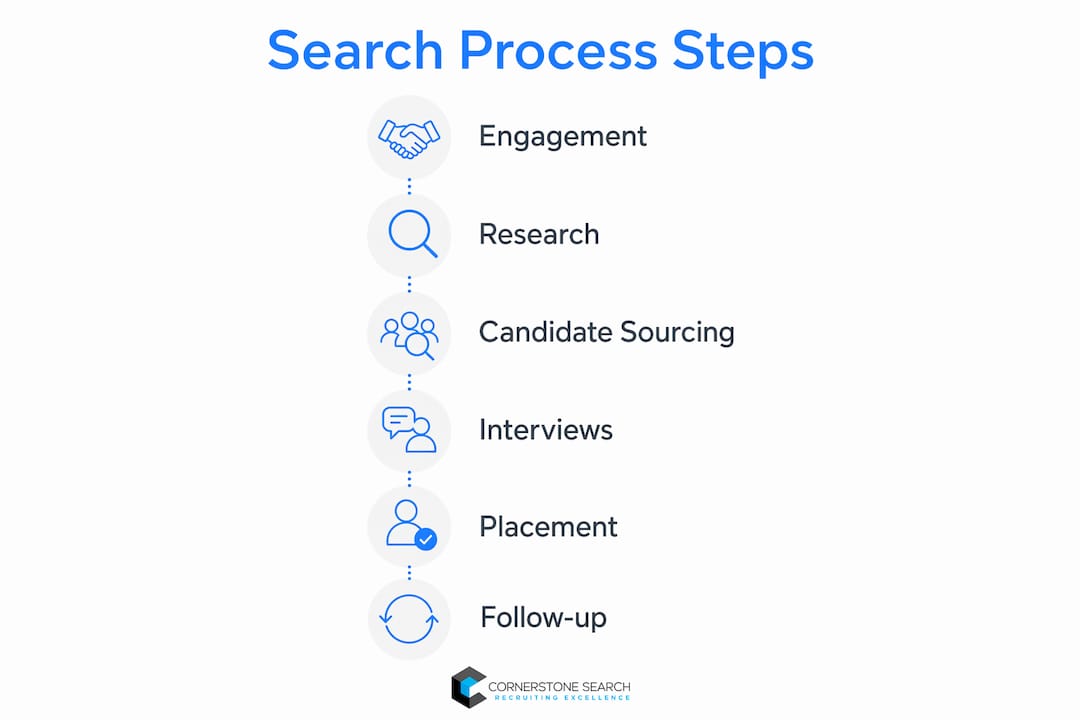
The retained search process follows a structured sequence. Elite firms complete it in roughly 9 weeks, compressing what traditional executive search often stretches to 14 weeks. The discipline comes from focused research and a clear methodology.
Here is how the process unfolds:
- Intake and briefing. The search firm conducts a deep diagnostic with the client. This is the most critical phase. Defining failure modes, political dynamics, success metrics, and cultural requirements at this stage determines whether the search succeeds or stalls. A weak brief produces a weak shortlist.
- Market mapping. The firm identifies the universe of qualified candidates, including those not actively looking. This passive candidate pool is the primary target. Active job seekers represent only a fraction of the best talent available.
- Outreach and assessment. Researchers and consultants contact targeted candidates directly. Qualified prospects go through structured interviews, competency assessments, and reference checks before the client sees their name.
- Shortlist presentation. The client receives a curated group of three to five candidates, each with a detailed profile and the firm’s recommendation. This is not a stack of resumes. It is a researched argument for each person.
- Client interviews and selection. The firm manages interview scheduling, candidate communication, and feedback loops. This keeps the process moving and protects the candidate experience.
- Offer negotiation and close. The firm acts as a neutral intermediary during compensation discussions. This reduces friction and improves acceptance rates.
- Post-placement support. Most retained engagements include a guarantee period of 6–12 months. If the hire does not work out within that window, the firm conducts a replacement search at no additional fee.
The entire process dedicates 200–400 hours of firm resources to a single search. That investment is what separates retained from every other recruiting model.
Pro Tip: Brief the search firm as if you are briefing your board. Include the business context, the team dynamics, and what has caused previous hires in this role to fail. That level of detail directly improves the quality of candidates you see.
What are the key benefits of retained executive search?
Retained search delivers outcomes that other recruiting models cannot replicate at the senior level. The benefits are structural, not incidental.
- Access to passive candidates. The best executives are not browsing job boards. Retained firms build relationships with high-performing leaders who are employed and not looking. That network is the product.
- Confidentiality. Sensitive hires, such as replacing a sitting executive or entering a new market, require discretion. Retained search operates quietly. The role never needs to be posted publicly.
- Selectivity in candidate presentation. Retained firms have the leverage to decline presenting candidates who lack cultural or organizational fit, even when credentials look strong on paper. Contingency firms face revenue pressure to present every viable candidate. That difference in incentive structure matters enormously.
- Deep organizational assessment. Retained firms invest in non-billable work like organizational diagnosis and integration planning. This work does not appear on an invoice, but it directly improves long-term hire success.
- Higher placement success rates. Elite retained firms report 80–90% placement success rates. That figure reflects both the quality of the process and the post-placement support that follows.
- Long-term ROI. The upfront cost is real. The cost of a failed senior hire, including severance, lost productivity, and a second search, is far larger. Retained search reduces that risk significantly.
Pro Tip: Ask any retained firm you are evaluating to walk you through a recent search that did not go as planned. How they handled it tells you more about their partnership quality than any success story.
Retained vs. contingency search: which model fits your hire?
The structural differences between retained and contingency search determine which model fits a given role. Understanding those differences prevents a costly mismatch.
| Factor | Retained search | Contingency search |
|---|---|---|
| Payment structure | Upfront fee in installments, regardless of outcome | Fee paid only on successful placement |
| Exclusivity | Client works with one firm | Multiple firms compete simultaneously |
| Candidate pool | Passive, senior, often not actively looking | Active candidates, broader market |
| Role seniority | C-suite, VP, board level, above $200,000 | Mid-level, specialist, commodity skills |
| Confidentiality | High, search conducted discreetly | Lower, role often posted publicly |
| Timeline | Structured, typically 9–14 weeks | Variable, can be faster for active pools |
| Post-placement support | Guarantee period of 6–12 months | Typically shorter or no guarantee |
| Best suited for | Scarce talent, sensitive hires, high-stakes roles | Roles with large active candidate pools |
Retained search fits C-suite and board-level positions requiring confidentiality and access to passive talent. Contingency search works well for mid-level roles where active candidates are plentiful and speed matters more than depth.
Some firms offer a hybrid model, sometimes called an engaged search, where a partial upfront fee secures priority attention without full exclusivity. This sits between the two models and suits organizations that want more commitment than contingency but are not ready for a full retainer.
How to maximize results when working with a retained search firm
The quality of client engagement directly predicts the quality of the hire. Treating the search firm as a passive vendor is the most common mistake organizations make.
- Invest in the intake briefing. Bring your CHRO, the hiring manager, and key stakeholders to the kickoff. The more context the firm receives, the more precisely they can target. Vague briefs produce generic shortlists.
- Respond to shortlists within 48 hours. Delays in feedback stall the search and signal to top candidates that the organization is not serious. The best executives have options and move quickly.
- Calibrate after the first round. If the first candidates are not quite right, say so specifically. “Not senior enough” or “too operationally focused” gives the firm direction. “Not what we are looking for” does not.
- Evaluate beyond credentials. Retained firms conduct deep culture and organizational fit assessments. Read those assessments carefully. A candidate who looks perfect on paper but scores poorly on cultural alignment is a risk, not a safe choice.
- Use the post-placement period. The guarantee window is not just insurance. It is an opportunity to flag early integration challenges before they become permanent problems. Communicate with the firm during the first 90 days.
- Avoid scope creep. Changing the role definition mid-search restarts the market mapping process. If the role evolves, communicate that clearly and early so the firm can recalibrate rather than guess.
For organizations hiring senior sales leadership roles, these practices are especially critical. Sales leadership hires carry direct revenue consequences, which raises the cost of a slow or misaligned search.
Key takeaways
Retained executive search delivers better senior hiring outcomes because it combines exclusivity, deep research, and a structured partnership model that contingency recruiting cannot replicate.
| Point | Details |
|---|---|
| Exclusive engagement model | The client pays upfront to secure one firm’s full resources for a single search. |
| Structured fee installments | Fees are paid in three stages: engagement, shortlist delivery, and placement. |
| Passive candidate access | Retained firms target employed executives not actively seeking new roles. |
| Post-placement guarantee | Most retained searches include a 6–12 month replacement guarantee for added security. |
| Client engagement drives outcomes | Active participation in briefings and calibrations directly improves hiring success. |
Why retained search still wins, even in a world of instant recruiting tools
The argument I hear most often against retained search is that it is slow and expensive. I have been placing senior sales leaders since 1996, and I will tell you plainly: that argument confuses cost with value.
A retained search that takes 9 weeks and costs 30% of first-year compensation is cheap compared to a bad hire that costs 18 months of salary, disrupts a team, and sets a growth plan back by a year. The math is not close.
What I have observed over decades of retained work is that the firms and clients who treat this as a strategic partnership consistently outperform those who treat it as a transaction. The intake briefing is not a formality. It is the moment where the search either gets aimed correctly or does not. I have seen searches fail entirely because a client gave a 20-minute briefing and then went silent for three weeks.
The other thing worth saying plainly: retained search is not for every role. If you are hiring a mid-level account executive with a well-defined skill set and an active candidate pool, contingency recruiting is faster and cheaper. Retained search earns its cost at the senior level, where the talent is scarce, the stakes are high, and the wrong decision is genuinely painful.
The firms that get the most from retained search are the ones who show up as partners. They brief thoroughly, respond quickly, and trust the process. That is not a soft observation. It is the pattern I have seen produce the best hires, consistently, across every industry I have worked in.
— Rich Rosen
Senior leadership hiring with Cornerstonesearch

Cornerstonesearch has placed over 1,200 sales professionals since 1996, with an average time from search kickoff to offer acceptance of just 21 days. That speed does not come from cutting corners. It comes from a focused methodology and a network built specifically for SaaS and software firms. If your organization needs a senior sales leader who can perform from day one, the sales recruitment expertise at Cornerstonesearch is built for exactly that challenge. For companies that cannot afford a slow or misaligned hire at the top, Cornerstonesearch delivers the depth of a retained search with the speed that growth-stage companies require. Learn more about specialized executive search services tailored to senior sales leadership.
FAQ
What is the typical fee for a retained executive search?
Retained executive search fees typically range from 25–33% of the placed executive’s first-year total compensation. Fees are paid in three installments across the engagement.
How long does a retained executive search take?
A well-run retained search takes approximately 9–14 weeks from kickoff to offer acceptance. Disciplined firms with focused research processes consistently reach the shorter end of that range.
What roles are best suited for retained search?
Retained search is best suited for C-suite, VP, and board-level roles compensating above $200,000, especially when confidentiality is required or the talent pool is primarily passive.
What happens if the placed executive does not work out?
Most retained search engagements include a post-placement guarantee of 6–12 months. If the hire leaves or is let go within that window, the firm conducts a replacement search at no additional fee.
How is retained search different from contingency recruiting?
Retained search requires an upfront fee and gives the client exclusive access to one firm’s resources. Contingency recruiting involves no upfront cost but means multiple firms compete, and the focus shifts toward speed over depth.