

Executive references differ from standard references in scope, sources, depth, and risk focus. Where a standard check confirms employment and asks a few generic questions, an executive check is structured due diligence designed to surface leadership failures before they cost you a CRO, a board relationship, or a year of missed quota. Treat it as a risk-reduction gate, not a courtesy call.
The primary difference pillars at a glance:
- Rigor and depth: Executive checks involve more references, longer conversations, and structured behavioral questioning rather than a quick “would you rehire?”
- Reference sources: You go beyond the candidate’s curated list to include board members, direct reports, peers, investors, and clients.
- Question types: Behavioral event interviewing, derailer probes, and scenario questions replace factual confirmation.
- Third-party use: Retained search firms and specialized reference services are commonly engaged to reach independent contacts and reduce bias.
Key Takeaways
Executive reference checks are a structured risk-reduction process, not a formality, and the depth, sources, and methods required at the executive level are fundamentally different from what a standard check delivers.
| Point | Details |
|---|---|
| Scope and depth | Executive checks require 5–8 references, structured scoring, and behavioral event interviewing versus 2–3 quick calls for standard hires. |
| Independent references | Finding contacts the candidate did not nominate is the highest-leverage step; it consistently surfaces information that changes decisions. |
| Question quality | Scene-based, metric-anchored questions outperform generic ones; unstructured checks carry a predictive validity of around 0.26. |
| Legal guardrails | Get written consent, ask only job-related questions, document every call, and never treat an HR confirmation as a performance reference. |
| Cornerstonesearch | Runs independent reference identification, structured behavioral calls, and delivers a scored report on every executive sales search. |
Table of Contents
- Which referees actually matter for executive hires
- What to ask and how to ask it during executive reference calls
- When to use third parties, retained search firms, and back-channel checks
- Legal, consent, and confidentiality basics for executive reference checks
- How to structure and score an executive reference report
- What executive reference checks actually cost and how long they take
- A practical checklist and sample questions for executive reference calls
- Red flags in executive references and what to do about them
- How Cornerstonesearch runs executive reference checks in practice
- A blunt note from someone who has seen this go wrong
- Cornerstonesearch places the executive sales leaders who actually perform
- Sources
Which referees actually matter for executive hires
Not all references are created equal. A candidate’s college roommate who calls them “a visionary” is noise. A former direct report who can describe exactly how the candidate handled a missed quarter is signal.
Principal references, specifically direct managers and direct reports, reliably produce the highest diagnostic value for senior hires. Character references add social proof, but they rarely surface performance evidence. Here is how to rank your reference types by diagnostic value:
- Direct manager (former or current): Highest value. Knows the mandate, the results, and the behavior under pressure. Always required.
- Direct reports: Second highest. Reveals how the candidate actually leads, not how they present leadership. Critical for VP Sales and CRO hires where team retention is a key metric.
- Peers and cross-functional partners: Surfaces collaboration style, political behavior, and how the candidate operates when they have influence but no authority.
- Board members or investors: Relevant for C-suite hires. Reveals strategic credibility, communication style with governance stakeholders, and how the candidate handles accountability at the top.
- Clients or customers: Useful for revenue leaders. Shows external relationship quality, commercial judgment, and how the candidate represents the company.
HR confirmations (dates of employment, title, eligibility for rehire) are factual only. Treating an HR confirmation as a substitute for a real reference is one of the most common design failures in executive hiring. It tells you almost nothing about performance.
Candidate-provided lists are inherently biased. The candidate chose those people. Require at least one principal reference plus at least one independent contact, meaning someone you identified through your own network or research, not someone the candidate handed you. Independent reference identification is the single highest-leverage step in executive due diligence because non-nominated voices are the ones who often reveal real risk.

What to ask and how to ask it during executive reference calls
Generic questions get generic answers. “Tell me about John’s strengths” will get you “John is a great communicator and a real team player.” Useless. You need scenes, not adjectives.
The right approach anchors every question to the specific role mandate and uses behavioral event interviewing: ask for a specific situation, the actions the candidate took, and the measurable outcome. Unstructured reference checks carry a predictive validity of around 0.26, which is low. Scene-based, specific examples are far more diagnostic than aspirational labels.
Sample question blocks by executive concern:
Strategy execution:
- “Describe a specific initiative this person owned from kickoff to result. What was the original goal, what changed, and what did they do about it?”
- “Where did their strategy miss, and how did they respond?”
People management:
- “Walk me through a time they had to let someone go or manage out a low performer. How did they handle it?”
- “Who on their team got promoted because of their coaching? Can you name someone?”
Crisis and revenue accountability:
- “Tell me about a quarter where they missed number. What happened, and what did they do differently after?”
- “Describe a deal or a customer situation where things went sideways. What was their role in fixing it?”
Derailer probes:
- “What is the one thing you would coach them on if they were joining your team tomorrow?”
- “Were there situations where their style created friction? What did that look like?”
Scoring cues: A strong answer names a specific person, a specific number, a specific timeline, and a specific outcome. An answer full of “we” instead of “I,” vague timeframes, and no metrics is a flag worth noting.
Pro Tip: When a referee uses an adjective (“visionary,” “driven,” “collaborative”), ask them to turn it into a scene. “Can you give me a specific example of when you saw that?” If they can’t, the adjective is decoration, not evidence. Push for the metrics, the timeline, and the outcome.
You can find additional tactics for validating sales candidate claims that translate directly into reference call questioning.
When to use third parties, retained search firms, and back-channel checks
In-house reference checks work fine for mid-level hires. For executive searches, they often fall short because your internal team lacks the network reach to find independent references and the structured methodology to score what they hear.
Three distinct roles exist in the third-party ecosystem:
- Retained search firms: Identify independent references through their own networks, conduct structured calls, and deliver a scored report as part of the search engagement. This is the most integrated option and the one most likely to surface non-nominated contacts.
- Specialized reference services: Conduct structured reference interviews on your behalf using standardized question sets. Useful for consistency and bias reduction, though they depend on the contacts you provide.
- Investigative back-channel checks: Used in high-stakes or private equity-style diligence. Involves reaching out to people in the candidate’s network who were not nominated and who may not know they are being contacted as part of a reference process.
Back-channel checks help surface non-nominated referees and contextual signals, and they are used more often in high-stakes executive hiring. The benefit is obvious: you get unfiltered information. The risk is also real: done carelessly, they can breach confidentiality, damage the candidate’s current employment, and expose your organization to legal risk.
The ethics line is straightforward. Use back-channels only after the candidate has consented to a reference process. Do not contact their current employer without explicit permission. Keep the scope proportional to the role. And document everything.
Outsourcing reference checks to a retained search firm offers bias mitigation, broader network reach, and a structured output. The trade-off is cost and some loss of direct control over the conversation. For a CRO or VP Sales hire, the cost of a bad reference process is almost always higher than the cost of doing it right. Understanding how executive search firms work helps you decide when to bring one in.
Legal, consent, and confidentiality basics for executive reference checks
This is not a law firm, and this is not legal advice. But here are the guardrails every hiring team should know before they pick up the phone.
Candidate consent: Get written consent before contacting any reference. For standard employment background checks governed by the Fair Credit Reporting Act (FCRA), there are specific authorization requirements. Reference conversations conducted directly by the employer or a retained search firm typically fall outside FCRA’s consumer-report rules, but structured protocols, candidate consent, and job-related questioning are best practices regardless of the legal framework.
What HR confirmations will and won’t give you: Most HR departments will confirm dates of employment, title, and sometimes eligibility for rehire. They will not discuss performance, conduct, or the reason for departure. That is not obstruction; it is standard legal risk management on their end. Plan for it.
Do’s and don’ts to reduce legal exposure:
- Ask only job-related questions. Avoid anything touching protected characteristics (age, race, religion, disability, family status, national origin).
- Document every reference call: who you spoke with, when, what was asked, and what was said.
- Apply the same question set consistently across all candidates for the same role.
- Do not share reference information beyond the hiring committee.
- Do not contact a candidate’s current employer without explicit written consent.
- Do not treat a single negative comment as a disqualifier without corroboration.
Pro Tip: Keep a reference call log for every executive search. Date, time, referee name, relationship to candidate, questions asked, and a summary of answers. If a hiring decision is ever challenged, your documentation is your defense.
For a deeper look at how background checks work for executive hires, including credential verification and third-party screening, that resource covers the full due diligence picture.
How to structure and score an executive reference report
A reference call without a structured output is just a conversation. You need a repeatable format that turns what you heard into something a hiring committee can actually use.
Compact report template:
- Executive summary: Two to three sentences. What did the references confirm, what was unclear, and what is the recommended decision weight?
- Evidence matrix: A grid mapping each referee against the key competencies for the role (strategy execution, people leadership, revenue accountability, crisis management). Mark each cell as confirmed, partial, or not addressed.
- Discrepancy log: Any inconsistency between what the candidate said in interviews and what references reported. Flag these explicitly.
- Recommended decision weight: One of four outcomes (see below).
Triangulation rules: Treat a claim as confirmed when at least two independent sources affirm it with specific examples. A single-source red flag warrants follow-up before it becomes a disqualifier. Multiple minor concerns from different sources, even if each seems small, often point to a real pattern.
Decision thresholds:
| Rating | Meaning | Recommended action |
|---|---|---|
| Recommend/Hire | Strong, consistent, specific affirmations across sources | Proceed with confidence |
| Proceed with conditions | Mostly positive with one addressable gap or concern | Proceed; address gap in onboarding or initial plan |
| Escalate for review | Inconsistencies or a single significant red flag | Seek one additional independent reference before deciding |
| Do not hire | Multiple red flags, evasions, or confirmed ethical concerns | End the process |
This framework applies directly to board-level hiring decisions where the committee needs a clear, evidence-based recommendation rather than a verbal summary.
What executive reference checks actually cost and how long they take
Realistic expectations matter here. If you are planning to run a thorough executive reference process and expecting it to wrap in 48 hours, you will either cut corners or be disappointed.
Typical timelines:
- In-house checks (candidate-provided references only): 5–10 business days, assuming referees are responsive.
- In-house checks with independent reference identification: 2–3 weeks.
- Third-party reference service: 1–2 weeks for a structured report.
- Retained search firm (references included in the engagement): 2–4 weeks, often running in parallel with final-round interviews.
For executive and senior roles, running preliminary reference checks earlier in the final interview stage is increasingly common because the candidate pool is smaller and the risk is higher. Most firms still formally complete checks after a conditional offer, but starting outreach earlier compresses the overall timeline.
Cost expectations:
- In-house: Staff time only, typically 4–8 hours per candidate for a thorough executive check.
- Third-party reference services: Fees vary by provider and scope; per-report models are common.
- Retained search: Reference work is typically wrapped into the overall search fee, which is usually a percentage of first-year compensation.
To shorten cycle time without losing rigor, run reference calls in parallel rather than sequentially. Assign one person to schedule all calls simultaneously. Prepare your question guide in advance so every call starts without delay. Faster executive search processes are possible when the workflow is built for speed from the start.
A practical checklist and sample questions for executive reference calls
Copy this. Put it in your interviewer guide. Use it every time.
Before the call:
- Confirm the referee’s relationship to the candidate (title, reporting line, duration of overlap).
- Review the candidate’s stated accomplishments from their resume and interviews.
- Prepare role-specific questions anchored to the mandate (quota, team size, budget, strategic scope).
- Have your scoring rubric ready before you dial.
- Confirm you have written consent from the candidate to contact this person.
During the call:
- Open with context: “I want to understand [candidate’s name]’s work in [specific role or time period].”
- Ask for scenes, not adjectives. Push for specifics on every competency.
- Note hesitations, pauses before answering, and any pivot away from a direct question.
- Ask the re-hire question directly: “Would you hire this person again, and in what role?”
- Close with: “Is there anything I haven’t asked that you think I should know?”
Sample questions for CRO and VP Sales mandates:
- “Describe how they built or rebuilt a sales team. What was the starting point, and what did it look like 12 months later?”
- “How did they handle a rep who was consistently below quota? Walk me through what happened.”
- “What was their relationship with the product and marketing teams? Any friction? How did they manage it?”
- “Give me a specific example of a deal or a customer they saved. What did they actually do?”
- “Where did their judgment fail? What would you do differently if you were managing them again?”
After the call:
- Write up your notes within 30 minutes while the conversation is fresh.
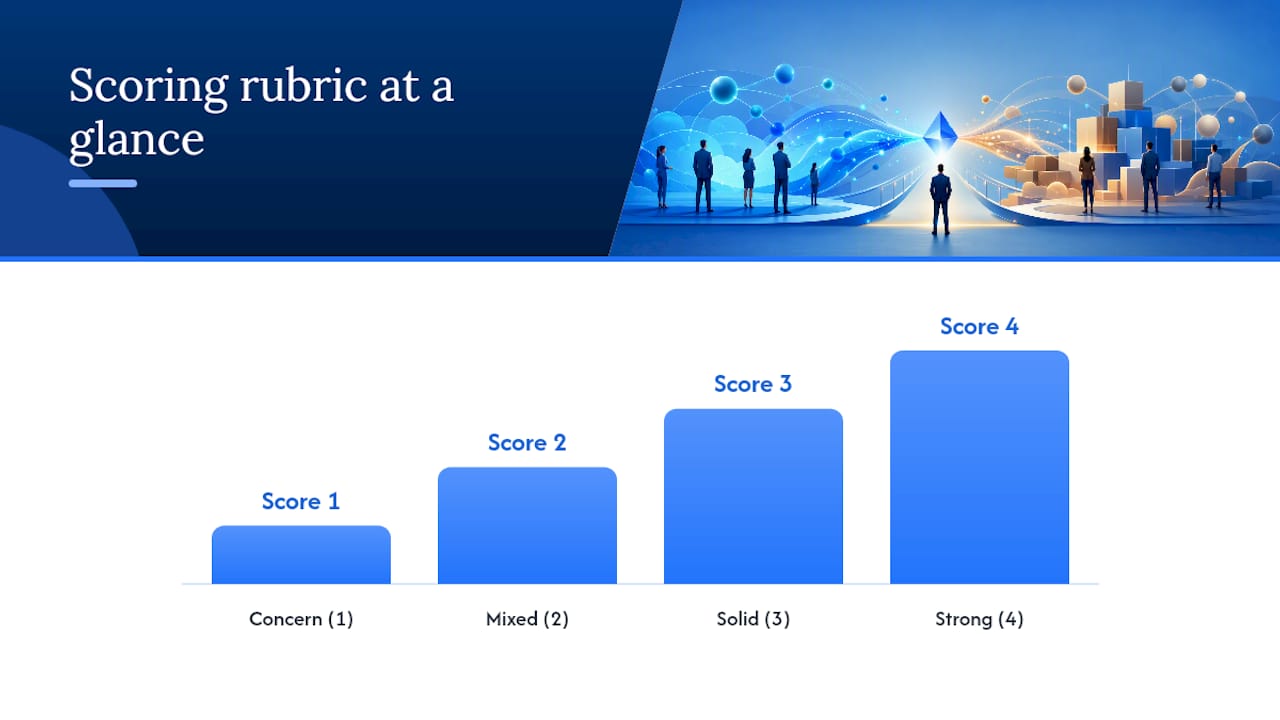
- Rate each competency on your rubric (1–4 scale works well: 1 = concern, 2 = mixed, 3 = solid, 4 = strong).
- Flag any answer that contradicts something the candidate said in interviews.
- Note whether the referee volunteered information or only answered what was asked directly.
For SaaS-specific hiring nuances, the SaaS sales recruiting FAQ covers common questions hiring managers run into when vetting revenue leaders.
Red flags in executive references and what to do about them
Some red flags are obvious. Others hide behind polished language and careful phrasing. Here is what to watch for.
High-value red flags:
- A referee who was supposed to be a strong advocate gives vague, short answers and declines to give specific examples.
- Inconsistency between what the candidate claimed (quota attained, team size, deal size) and what the referee describes.
- A referee who pauses before answering the re-hire question, or qualifies it heavily (“in the right environment,” “with the right support structure”).
- Any reference to ethical concerns, even oblique ones. “There were some situations that were handled in ways I wouldn’t have chosen” is not nothing.
- Multiple references who independently describe the same people-management problem (volatility, credit-taking, inability to develop talent).
- A referee who asks what the candidate said about them before answering your questions.
Weak signals that are often noise:
- A single reference who seems personally cool toward the candidate (personality clash, not a performance issue).
- Vague praise with no specifics (common from HR contacts and character references who simply don’t have performance data).
- A referee who is clearly busy and gives short answers across the board.
Decision flow:
- One strong red flag from an independent reference: seek one additional independent contact before deciding.
- Two or more red flags from different sources pointing to the same issue: pause the offer and escalate to the hiring committee.
- Any confirmed ethical concern (financial misconduct, harassment, misrepresentation of credentials): end the process.
- A single minor concern from a candidate-provided reference only: note it, probe it in a follow-up conversation with the candidate, and weigh it against the full picture.
Back-channel and investigative checks are most valuable at this stage when you have a red flag but no corroboration. A non-nominated source who confirms the concern independently is the clearest signal you will get.
How Cornerstonesearch runs executive reference checks in practice
The workflow starts at intake. Before a single reference call happens, the mandate gets anchored: what does this CRO or VP Sales actually need to accomplish in the first 12 months? What does failure look like? What are the two or three behaviors that would make this hire a disaster? Those answers shape every question on every call.
From there, independent reference identification happens in parallel with the final interview stage. The goal is to find at least two contacts the candidate did not nominate, using network mapping, LinkedIn, and direct outreach through industry relationships built over decades of SaaS sales recruiting. This step consistently surfaces information that changes hiring decisions and is non-negotiable on every executive search.
Structured calls follow a consistent question guide anchored to the role mandate, with behavioral event interviewing throughout. Every call gets scored against the same competency rubric. Discrepancies between candidate claims and referee accounts go into the discrepancy log immediately.
The output is a compact reference report: an executive summary, an evidence matrix, a discrepancy log, and a clear decision recommendation. No fluff. No “great communicator” summaries. Just evidence and a recommendation the hiring committee can act on.
Pro Tip: The most revealing moment in any executive reference call is the pause. When a referee hesitates before answering the re-hire question, or takes a breath before describing how the candidate handled conflict, pay attention. The pause is data. What they say next is usually the most honest thing in the conversation.
Cornerstonesearch has placed over 1,200 sales professionals since 1996, and the reference process is a core part of why those placements hold. The benefits of specialized executive search firms are most visible at exactly this stage: network reach, structured methodology, and the judgment to know when a red flag is a dealbreaker versus a coaching opportunity.
A blunt note from someone who has seen this go wrong
Here is what I have learned placing sales leaders for 30 years: most hiring mistakes are not interview mistakes. They are reference mistakes. The candidate performed well in every conversation. The references were checked. And still, six months later, the team is in chaos and the CRO is gone.
How does that happen? Usually one of three ways.
First, the references were all candidate-provided and all friendly. Nobody called anyone who had actually seen the candidate fail. Second, the questions were too soft. “What are their strengths?” is not a reference question. It is an invitation to recite a LinkedIn summary. Third, the check happened after the offer was already emotionally made. At that point, you are not doing diligence. You are looking for permission to proceed.
A few things I watch for on every call:
- A referee who answers every question in the third person plural (“we did this,” “the team accomplished that”) and never gives the candidate individual credit or individual accountability.
- Vague timelines. “At some point during their tenure” means the referee either doesn’t remember or doesn’t want to commit to specifics.
- Refusal to name a metric. Revenue leaders live by numbers. If a referee can’t tell you what quota the candidate carried or what the team’s attainment looked like, something is off.
- The “great in the right environment” qualifier. Every time. That phrase means the candidate has a specific failure mode and the referee knows it.
Run your references early. Run them on people you found, not just people the candidate handed you. Ask for scenes. Push for numbers. And when something feels wrong, trust it.
Cornerstonesearch places the executive sales leaders who actually perform
Hiring a CRO or VP Sales without a rigorous reference process is rolling the dice on your most expensive hire. Cornerstonesearch runs the full executive reference workflow on every search: independent reference identification, structured behavioral calls, triangulated scoring, and a clear written recommendation before any offer goes out.

The average search from kickoff to offer acceptance runs 21 days. That speed does not come from cutting corners on diligence. It comes from a process built for both rigor and efficiency, backed by a network of over 1,200 placed sales professionals and 30 years of SaaS and software recruiting. If you are hiring a revenue leader and want to know exactly who you are getting before you sign an offer, start the conversation here.