

TL;DR:
- Startups often fail in sales hiring due to poor timing, unsuitable candidates, and lack of a repeatable sales process. Rushed hiring without clear playbooks or defined success metrics results in costly mis-hires that drain resources. Building a documented sales process, hiring with behavioral focus, and hiring multiple candidates simultaneously can improve success rates significantly.
Startup sales hiring fails for three reasons: wrong timing, wrong candidate, and no repeatable sales process to hand off. The result is a mis-hire that costs far more than the salary. A failed senior sales hire at an early-stage company can run £200,000 to £400,000 when you factor in salary, recruiting fees, and lost pipeline. That number should stop you cold. VP of Sales and CRO tenure in tech has already dropped below 14 months in 2026, down from 18 months just a few years ago. That is not a talent shortage. That is a hiring process problem.
Why startups struggle hiring salespeople more than big companies do
Startups and large enterprises are not playing the same game. At a big company, a salesperson walks in with a brand, an SDR team, a marketing engine, and buyers who already have budget. At a startup, none of that exists. The rep has to create demand, educate the market, and sometimes convince a prospect to build a budget line item from scratch.

Big company salespeople routinely fail in startups because their skills are built for a structured buying process that does not exist yet. They are closers, not builders. They know how to work a deal that is already in motion. They do not know how to start a fire with wet wood.
The behavioral traits that predict startup sales success look different from enterprise pedigree. You need someone who is comfortable with ambiguity, willing to prospect without a script, and capable of selling a vision before the product is fully baked. That profile is rare, and it does not show up on a resume with a Fortune 500 logo.
Here is what to look for instead of brand names:
- Proven outbound motion. Did they build their own pipeline or inherit it?
- Short sales cycle experience. Can they close without a six-month committee process?
- Comfort with product gaps. Have they sold something that was not finished yet?
- Founder-level curiosity. Do they ask smart questions about the business model?
- Low ego, high accountability. Will they own a miss without blaming the product?
Pro Tip: Ask candidates to walk you through the last deal they sourced completely on their own. If they struggle to name one, keep moving.
How founder emotions drive repeated bad sales hires
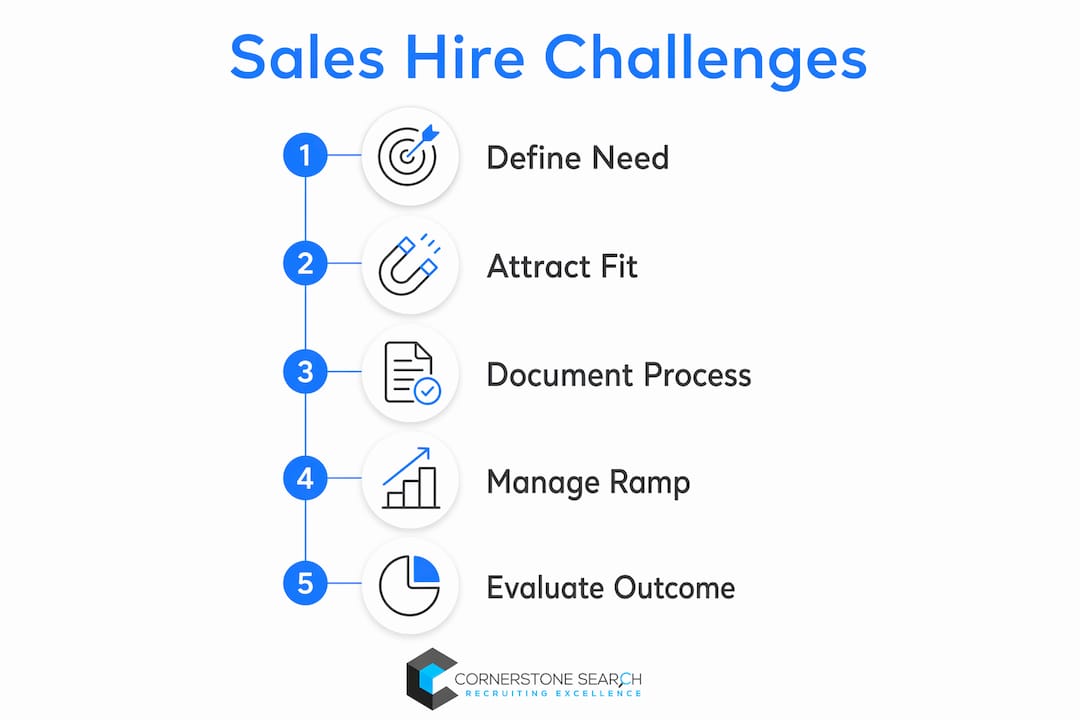
Founders hire salespeople to escape selling. That is the honest truth. The moment selling becomes painful, the instinct is to hand it off. The problem is that hiring under urgency lowers your standards without you noticing. You start accepting vague answers. You skip reference checks. You mistake a confident interview for a proven track record.
Owen Van Syckle has written clearly about this trap. Founders hire based on relief, not readiness. The candidate walks in polished, tells a good story, and the founder thinks, “Finally, someone who gets it.” That feeling is dangerous.
Founders keep hiring the wrong sales rep because they are solving for their own discomfort, not for the company’s actual sales readiness. The urgency to stop selling overrides the discipline to hire well. Skipping reference checks, accepting vague answers, and mistaking confidence for competence are the predictable results.
— Owen Van Syckle
The common pitfalls look like this:
- Skipping structured reference checks because the candidate “seemed great”
- Accepting “I’m a hunter” without asking for specific pipeline numbers
- Hiring the first qualified-looking candidate instead of running a full process
- Confusing a polished demo with actual closing ability
- Not defining what success looks like in the first 90 days before the offer goes out
The fix is not complicated. Define what you need before you start looking. Write down your sales process, your buyer profile, and your success metrics. Then hire against that, not against your gut.
Why no sales playbook means your new hire is set up to fail
The ramp period for complex B2B sales is 4–7 months. Most founders expect results in 60 days. That gap alone kills more sales hires than bad candidates do.
A documented sales playbook cuts the first account executive ramp by 60 days on average. That is not a nice-to-have. That is two months of quota production you are leaving on the table if you skip it. Without a written playbook, your new rep is guessing at the buyer profile, the objection responses, and the deal stages. They will figure it out eventually, or they will quit, and you will start over.
Inadequate onboarding is one of the top reasons sales hires fail early. Startups that scale headcount without building infrastructure first create chaos, not revenue. Written playbooks, clear role definitions, and basic sales ops support are not bureaucracy. They are the foundation that lets a rep perform.
Here is what a minimum viable sales playbook covers before you hire:
- Ideal customer profile. Industry, company size, title, and the pain they are trying to solve.
- Discovery framework. The five questions every rep must ask on a first call.
- Objection map. The top five objections and the responses that actually work.
- Deal stages. What has to happen for a deal to move from one stage to the next.
- Competitive positioning. How you win, and what you say when a prospect names a competitor.
- Success metrics. Pipeline targets, activity benchmarks, and quota expectations by month.
Pro Tip: If you cannot write the playbook yourself, you are not ready to hire a salesperson. Run the sales motion as a founder for at least six months first.
| Sales readiness factor | Not ready | Ready to hire |
|---|---|---|
| Sales process documented | No written process | Step-by-step playbook exists |
| Buyer profile defined | “Anyone who needs this” | Specific ICP with named titles |
| Ramp expectations set | “Hit quota in 60 days” | 4–7 month ramp with milestones |
| Onboarding plan built | “Figure it out” | Structured 30/60/90 day plan |
| Measurement in place | Revenue only | Pipeline, advancement, and close tracked |
Practical strategies to improve your sales hiring success rate
Roughly 50% of first sales hires in early-stage startups fail, even when founders hire carefully. That number is not a reason to panic. It is a reason to plan for it. Hiring two salespeople simultaneously gives you a natural comparison, accelerates your learning, and means one failure does not wipe out your entire go-to-market motion.
Here is what actually works when you are ready to hire:
- Run behavior-based interviews. Ask for specific numbers, named accounts, and deal stories. Vague answers are a red flag.
- Do a live role-play. Give the candidate a realistic scenario and watch how they handle objections. Polished prep is fine. Falling apart under pressure is not.
- Check references properly. Call the references they did not give you. Ask former managers directly: “Would you hire this person again to build a territory from scratch?”
- Align comp to your sales cycle. If your average contract value is low and your cycle is short, a heavy base with a small variable is wrong. Match OTE structure to the actual economics.
- Measure the right three things. Salespeople must focus on building pipeline, advancing pipeline, and closing pipeline. Everything else is a distraction. Track those three activities weekly from day one.
The high stakes of startup hiring mean you cannot afford to wing the process. Use a hiring rubric built around observable sales behaviors rather than credentials. A rubric forces consistency across candidates and gives you something concrete to debrief against after interviews.
Pro Tip: Before you post the job, write a one-page scorecard. List the five behaviors that predict success in your specific sales role. Grade every candidate against it. Your gut is not a scorecard.
Key takeaways
Startup sales hiring fails most often because founders hire before they are ready, choose candidates built for big companies, and skip the playbook that would let any rep succeed.
| Point | Details |
|---|---|
| Cost of a bad hire | A failed senior sales hire can cost £200,000–£400,000 in salary, fees, and lost pipeline. |
| Playbook before people | A documented sales playbook cuts first rep ramp time by 60 days on average. |
| Hire two at once | Roughly 50% of first sales hires fail; hiring two simultaneously reduces your risk exposure. |
| Behavior over pedigree | Big company logos do not predict startup success; outbound motion and ambiguity tolerance do. |
| Measure three things | Track pipeline built, pipeline advanced, and pipeline closed. Everything else is noise. |
What 30 years of SaaS sales recruiting taught me about startup hiring
I have seen this play out hundreds of times. A founder calls me after firing their second VP of Sales in 18 months. They are frustrated, burned out, and convinced the problem is the candidates. Nine times out of ten, the problem started before the first interview.
The emotional trap is real. When you are tired of selling, anyone who walks in and sounds confident feels like a solution. I get it. But confidence in an interview and confidence in front of a cold prospect are two completely different things. I have seen candidates who could charm a room full of investors fall apart the moment a prospect pushed back on price.
The big company pedigree bias is just as dangerous. I have watched founders pay a premium for someone who spent a decade at a well-known enterprise software company, only to watch that person wait for inbound leads that never came. They were not bad salespeople. They were the wrong kind of salesperson for a company with no brand and no pipeline.
The best startup sales hires I have ever placed share one trait: they are comfortable being uncomfortable. They do not need a playbook handed to them, but they will build one once they see the pattern. They ask better questions than the founder expected. They treat a “no” as a data point, not a defeat.
Here is the uncomfortable truth. If you cannot describe your sales process in writing before you hire, you are not hiring a salesperson. You are hiring someone to figure out your sales process for you, and you are paying them a full OTE to do it. That is a consulting engagement, not a sales hire.
Get your sales recruiting process tight before you go to market. The candidates who are worth hiring will notice the difference.
— Rich Rosen
How Cornerstonesearch helps startups hire the right sales talent
Startup sales hiring is one of the highest-stakes decisions a founder makes. Getting it wrong twice in a row can set a company back by 18 months and burn through a significant chunk of runway.
Cornerstonesearch has placed over 1,200 sales professionals in SaaS and software companies since 1996. The average time from search kickoff to offer acceptance is 21 days. That speed matters when every month without a productive rep is a month of lost pipeline. Cornerstonesearch works specifically with SaaS and software firms, which means the candidate network and assessment frameworks are built for the exact hiring challenges described here. If you are ready to build a sales team that actually performs, the software sales recruitment practice at Cornerstonesearch is the place to start. You can also review the sales recruitment essentials guide to sharpen your process before the first call.
FAQ
Why do startups struggle hiring salespeople more than other roles?
Sales roles require a specific fit between the candidate’s skills and the company’s sales stage. Startups lack the brand, pipeline, and process that most experienced salespeople are trained to work with.
What does a failed sales hire actually cost a startup?
A failed senior sales hire at an early-stage company can cost £200,000–£400,000, including salary, recruiting fees, and opportunity costs from lost pipeline.
How long should a startup expect a new sales hire to ramp?
The standard ramp period for complex B2B sales is 4–7 months. Founders who expect results in 60 days set their hires up to fail before they start.
Should a startup hire one salesperson or two at once?
Hire two simultaneously when possible. Roughly 50% of first sales hires fail even with a solid process, so hiring two creates a comparison baseline and protects against total loss of momentum.
What is the single biggest mistake founders make when hiring salespeople?
Hiring under emotional urgency rather than readiness. Founders who are tired of selling lower their standards unconsciously, skip reference checks, and mistake a polished interview for proven sales ability.